

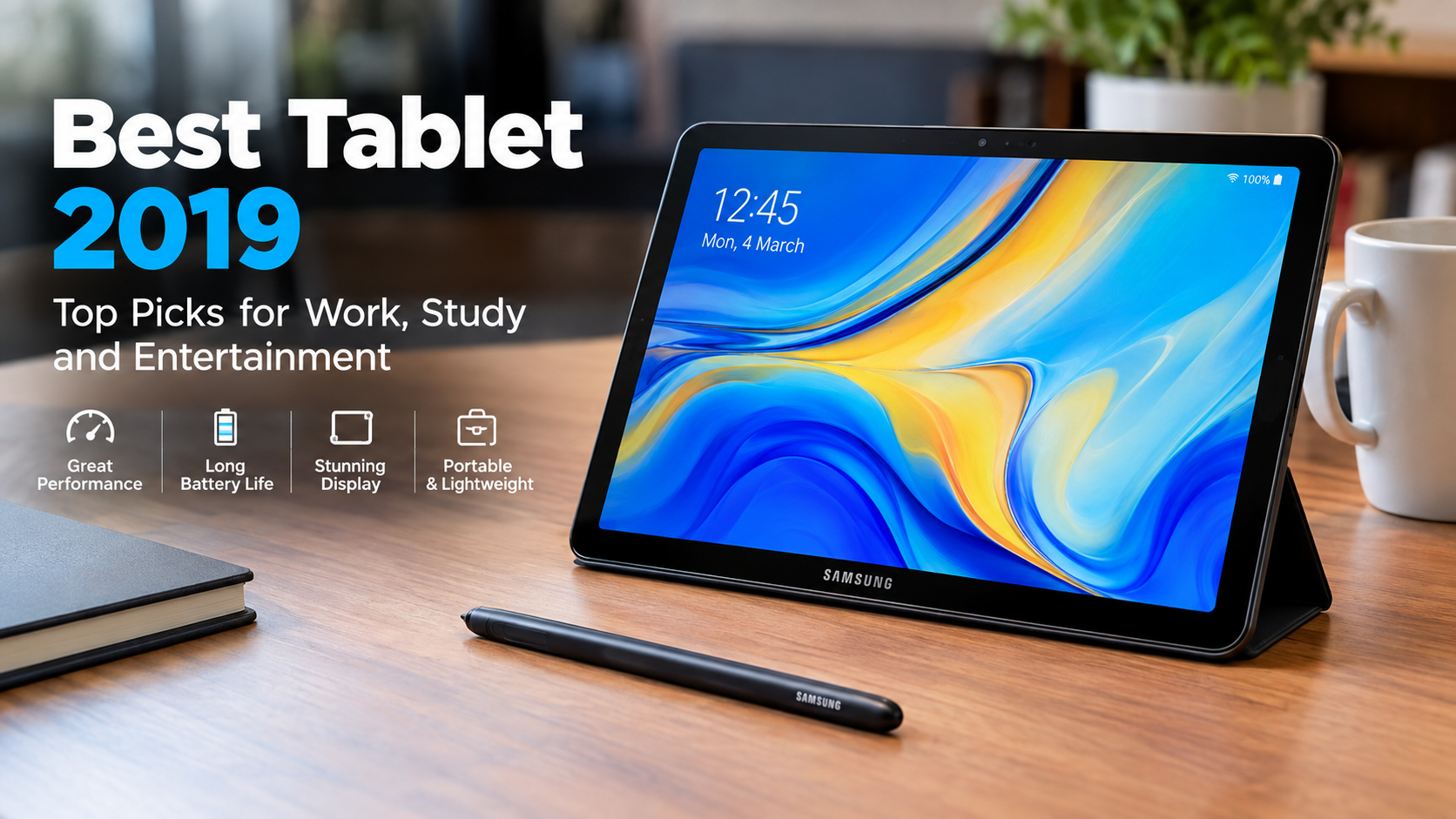
The best tablet 2019 lineup included several strong choices, but the Apple iPad Air (2019), iPad mini (2019), Samsung Galaxy Tab S6, Microsoft Surface Pro 6, and Amazon Fire HD 10 stood out for different types of users. The right choice depended largely on whether you wanted iPadOS, Android, Windows, a compact design, a productivity-focused device, or a low-cost tablet.
Although these tablets are now several years old, 2019 remains an interesting tablet generation because it included devices that established some of the features and designs that became standard later. For anyone researching older tablets, buying refurbished hardware, comparing historical models, or looking for a budget second-hand device, understanding the 2019 lineup can still be useful.
What Made the Best Tablet 2019 Models Stand Out?
Tablet buyers in 2019 had more meaningful choices than simply choosing between Apple and Android. Apple offered several iPad models across different price points, Samsung competed with premium Android hardware, Microsoft targeted people who wanted a Windows computer in tablet form, and Amazon focused on affordable entertainment.
The major differences were processor performance, operating system, display quality, accessory support, software ecosystem, portability, and price. Contemporary reviews frequently highlighted the iPad Air as a particularly balanced option, while the iPad mini appealed to people who prioritized portability.
Best Tablet 2019 Options at a Glance
| Tablet | Operating system at launch | Display | Processor | Best suited for |
|---|---|---|---|---|
| Apple iPad Air (2019) | iOS/iPadOS | 10.5-inch LCD | Apple A12 Bionic | General use, study, media and productivity |
| Apple iPad mini (2019) | iOS/iPadOS | 7.9-inch LCD | Apple A12 Bionic | Portability, reading and travel |
| Samsung Galaxy Tab S6 | Android | 10.5-inch Super AMOLED | Qualcomm Snapdragon 855 | Android users, entertainment and stylus work |
| Microsoft Surface Pro 6 | Windows 10 | 12.3-inch PixelSense | 8th-gen Intel Core | Windows productivity and desktop software |
| Amazon Fire HD 10 (2019) | Fire OS 7 | 10.1-inch IPS | MediaTek MT8183 | Affordable entertainment and basic tasks |
The specifications above are based on manufacturer documentation and contemporary product information.
Apple iPad Air (2019): The Balanced Choice
The 2019 iPad Air was one of the most well-rounded tablets available that year. Apple positioned it between the entry-level iPad and the considerably more expensive iPad Pro, giving buyers a large 10.5-inch display, an A12 Bionic processor, Apple Pencil support and Smart Keyboard compatibility. Contemporary reviews praised its combination of performance, display quality, battery life and price.
The A12 Bionic was a particularly important advantage. It was the same generation of processor used in several contemporary iPhones, and reviewers found it fast enough for demanding apps, gaming and everyday multitasking.
The tablet used a 10.5-inch LCD with a 2,224 × 1,668 resolution. It also supported the first-generation Apple Pencil, while the Smart Connector enabled compatible keyboard accessories.
Pros
- Strong A12 Bionic performance
- High-quality 10.5-inch display
- Apple Pencil support
- Smart Keyboard compatibility
- Good balance of size and portability
- Strong app ecosystem
Cons
- Older-looking design with large bezels
- Touch ID instead of Face ID
- No ProMotion display
- First-generation Apple Pencil support
- Lightning rather than USB-C
For many buyers researching the best tablet 2019 had to offer, the iPad Air represents a particularly useful starting point because it avoided many of the compromises of cheaper iPads without reaching iPad Pro pricing.
Apple iPad mini (2019): Best for Portability
The fifth-generation iPad mini, released in 2019, brought modern processor performance to Apple’s smallest tablet. Its 7.9-inch display made it substantially easier to carry than larger tablets while retaining support for the Apple Pencil.
The tablet used the same A12 Bionic family of processor as the 2019 iPad Air. Its display measured 7.9 inches and had a 2,048 × 1,536 resolution, with wide color support and a fully laminated panel.
Its compact size made it particularly useful for reading, browsing, note-taking and travel. The trade-off was that the smaller screen was less comfortable for extended multitasking than the 10.5-inch iPad Air.
Interestingly, contemporary industry coverage recognized the iPad mini as a leading tablet of 2019. IT Pro named the iPad mini 5 its tablet of the year and highlighted its performance, iPadOS features and Apple Pencil support.
Who Should Consider the iPad mini?
The iPad mini made the most sense for someone who wanted a powerful tablet that was easy to carry. It was especially attractive for reading, commuting, travel, handwritten notes and situations where a larger tablet felt unnecessarily bulky.
Samsung Galaxy Tab S6: A Premium Android Alternative
For Android users, the Samsung Galaxy Tab S6 was one of the most significant premium tablets of 2019. Samsung equipped it with a 10.5-inch Super AMOLED display, Qualcomm Snapdragon 855 processor, up to 8GB of RAM and up to 256GB of internal storage depending on configuration.
The display offered a 2,560 × 1,600 resolution, while the tablet included four speakers and support for an S Pen. Samsung also supported keyboard accessories and its DeX interface, which attempted to provide a more desktop-like environment.
The Snapdragon 855 gave the Tab S6 substantial performance for an Android tablet of its time. Engadget’s testing found the device capable of handling demanding multitasking and reported strong battery performance in its testing.
Pros
- Excellent Super AMOLED display
- Snapdragon 855 performance
- S Pen included
- Four-speaker audio
- Samsung DeX desktop-style interface
- Premium lightweight design
Cons
- Android tablet software was less mature for desktop-style work
- DeX had some usability limitations
- Keyboard accessory was an additional purchase
- Premium pricing compared with inexpensive Android tablets
The Galaxy Tab S6 was therefore particularly relevant to people who wanted Android rather than iPadOS and valued a high-quality screen and stylus functionality.
Microsoft Surface Pro 6: Best for Windows Productivity
The Microsoft Surface Pro 6 technically launched in 2018, but it remained an important tablet-style PC throughout 2019. Unlike conventional iPads and Android tablets, it ran full Windows and supported desktop applications.
Microsoft’s specifications list an 8th-generation Intel Core i5 or i7 processor, 12.3-inch PixelSense touchscreen, up to 16GB of RAM and SSD configurations reaching 1TB. It also included a full-size USB 3.0 port, Mini DisplayPort, microSDXC support and Microsoft’s Surface Connect port.
The 12.3-inch display had a 2,736 × 1,824 resolution and a 3:2 aspect ratio. Microsoft rated the device for up to 13.5 hours of local video playback under its specified test conditions, although real-world battery life naturally varies with workload and settings.
Why the Surface Pro 6 Was Different
The Surface Pro 6 was closer to a two-in-one PC than a traditional entertainment tablet. Its ability to run Windows software made it useful for office work, desktop applications and professional workflows.
The downside was that Microsoft’s Type Cover and Surface Pen were sold separately. Microsoft also notes that accessories such as the Type Cover and Surface Pen were not included with the base device.
For someone specifically looking for a Windows tablet around the 2019 period, the Surface Pro 6 offered capabilities that iPadOS and Android could not replicate in exactly the same way.
Amazon Fire HD 10 (2019): Budget-Friendly Entertainment
The Amazon Fire HD 10 (2019) targeted a very different audience. Rather than competing directly with premium iPads and Samsung’s flagship tablets, it focused on affordability and basic entertainment.
Amazon’s specifications show that the ninth-generation Fire HD 10 used a 10.1-inch 1,920 × 1,200 IPS display, a MediaTek MT8183 processor, 2GB of RAM and 32GB or 64GB of internal storage. It also supported microSD expansion up to 512GB.
The Fire HD 10 was suitable for activities such as video streaming, web browsing, reading and basic applications. However, its lower-end hardware and Fire OS ecosystem meant it was not directly comparable with premium tablets for professional productivity or demanding creative work.
Pros
- Affordable compared with premium tablets
- Large 10.1-inch display
- microSD storage expansion
- Suitable for streaming and casual use
- Simple Amazon-focused ecosystem
Cons
- Only 2GB of RAM
- Basic cameras
- Less flexible software ecosystem than iPadOS, Android or Windows
- Not designed as a high-performance productivity machine
For budget-conscious buyers researching the best tablet 2019 models, the Fire HD 10 was worth considering primarily because of its price-oriented design.
How the Main 2019 Tablets Compared
The biggest difference between these devices was not simply processor speed. Each model was built around a different idea of what a tablet should be.
The iPad Air emphasized balance, combining a relatively large screen with strong mobile performance. The iPad mini focused on portability, while the Galaxy Tab S6 emphasized premium Android hardware, AMOLED display technology and stylus support.
The Surface Pro 6 approached the category from the PC side. It offered Windows and desktop applications rather than trying to replace a traditional computer solely with mobile software. The Fire HD 10 went in the opposite direction, prioritizing affordability and straightforward media consumption.
Which 2019 Tablet Was Right for Different Users?
For General Everyday Use
The iPad Air was particularly well suited to everyday users who wanted browsing, streaming, gaming, note-taking and productivity in one device. Contemporary reviews described it as a strong middle ground between Apple’s entry-level iPad and iPad Pro.
For Students
The iPad Air and iPad mini both supported the first-generation Apple Pencil, making them useful for handwritten notes and annotations. The Air’s larger screen was more practical for documents and split-screen work, while the mini was easier to carry between classes.
For Android Users
The Galaxy Tab S6 offered the most obvious premium Android alternative among these models. Its Super AMOLED screen, Snapdragon 855 processor and included S Pen gave it a hardware feature set aimed at users who wanted more than basic Android tablet functionality.
For Windows Users
The Surface Pro 6 was the natural choice for people who depended on Windows desktop software. Its Intel processors, Windows operating system, USB connectivity and optional keyboard made it fundamentally different from mobile-first tablets.
For Budget Buyers
The Fire HD 10 was aimed at buyers who primarily needed an inexpensive screen for entertainment and basic computing. Its 2019 configuration offered a 10.1-inch Full HD-class display and expandable storage, but its 2GB RAM and Fire OS platform limited its suitability for demanding workloads.
Is a 2019 Tablet Still Worth Buying Today?
A 2019 tablet can still be useful in 2026, but software support, battery condition and purchase price matter more than the original specifications. A six- or seven-year-old device may have significantly reduced battery capacity, and some applications may require newer operating-system versions.
The hardware should therefore be evaluated as a used product rather than judged solely by its original reviews. A refurbished iPad Air or iPad mini, for example, may remain attractive if it receives the required software updates and is priced appropriately, while an older Android or Fire tablet can become less useful when application and security support falls behind.
The Surface Pro 6 deserves separate consideration because Microsoft states that it can be upgraded to Windows 11. However, buyers should still verify the specific device’s current operating-system status, battery condition and hardware configuration before purchasing.
What to Check Before Buying an Older 2019 Tablet
If purchasing one of these tablets second-hand, check more than the advertised model name.
- Battery condition: Older lithium-ion batteries can lose capacity over time.
- Screen: Look for cracks, dead pixels, discoloration and touch problems.
- Storage: Make sure the available capacity matches your needs.
- Software support: Check whether the device can run the operating system and apps you require.
- Accessories: Confirm whether a keyboard, stylus or charger is included.
- Ports and connectivity: Test USB, charging and wireless connections.
- Activation status: Make sure the previous owner’s account has been removed.
- Price: Compare the used price with newer entry-level tablets before buying.
These factors can make a bigger difference to the value of an older tablet than the specifications it had when originally released.
Best Tablet 2019: Final Takeaway
The 2019 tablet market offered several distinct choices rather than one universal winner. The iPad Air (2019) stood out for its balance of performance, display size, accessories and software, while the iPad mini (2019) focused on portability. The Galaxy Tab S6 provided a premium Android experience, the Surface Pro 6 delivered Windows desktop computing in a tablet-style design, and the Fire HD 10 (2019) concentrated on affordable entertainment.
Contemporary reviews support this broad distinction. Ars Technica described the 2019 iPad Air and mini as especially compelling options for many users, while IT Pro selected the iPad mini 5 as its tablet of the year and highlighted the Galaxy Tab S6 as highly commended.
For anyone evaluating these devices today, however, the original 2019 ranking matters less than current software support, battery health, physical condition and the price of the used device.
Frequently Asked Questions
What was the best tablet in 2019?
There was no single tablet that was best for every user. The iPad Air, iPad mini, Galaxy Tab S6, Surface Pro 6 and Fire HD 10 each targeted different needs, with the iPad Air offering a particularly balanced combination of performance, display and price according to contemporary reviews.
Was the iPad Air good in 2019?
Yes. The 2019 iPad Air combined an A12 Bionic processor with a 10.5-inch display, Apple Pencil support and Smart Keyboard compatibility. Contemporary reviews praised its performance and overall balance while noting compromises such as its older design and lack of ProMotion.
Was the Samsung Galaxy Tab S6 a good tablet in 2019?
The Galaxy Tab S6 was a premium Android tablet with a Snapdragon 855 processor, 10.5-inch Super AMOLED display, four speakers and an S Pen included. Samsung also supported DeX and keyboard accessories, giving the device a stronger productivity focus than many Android tablets of the period.
Which 2019 tablet was best for Windows users?
The Microsoft Surface Pro 6 was designed around Windows and Intel processors, making it the most suitable option among these models for people who needed traditional Windows desktop software. Its 12.3-inch PixelSense display and optional Type Cover also made it practical as a laptop-style computer.
Is the Amazon Fire HD 10 from 2019 still useful?
It can still be useful for basic activities such as media consumption and web browsing, particularly if purchased cheaply. Its 2019 hardware included a 10.1-inch 1,920 × 1,200 display, 2GB RAM and expandable storage, but buyers should consider its age and software limitations before purchasing one today.
Should you buy a 2019 tablet in 2026?
Only if the price, condition and software support make sense for your intended use. Before purchasing, check battery health, operating-system support, app compatibility and the cost of newer alternatives.
Also read: Lady Gaga

1 Comment
Pingback: Business U: Courses, Platform, and Stukent Transition